Ülgen
Command line · Go · Coding agents
Connects EVREN, Türkiye's national model API, to the coding tools you already use: Qwen Code, opencode, Codex CLI and Claude Code.
The coding tools already work well, and EVREN serves capable open-weight models. What is missing is the part in between: signing in, keeping the key safe, accepting the terms, watching the quota, writing the right settings into each tool, and a Turkish interface. Ülgen is that part. It is one binary, not a new coding agent, and it is named after the creator deity of Turkic mythology.
- License
- AGPL-3.0-only
- Interface
- EN · TR
- Runs on
- Linux · Windows · macOS
How it works
-
Sign in
Run ulgen. It opens EVREN's API keys page (sign-in is through e-Devlet), asks for the key, shows the terms and saves the key.
-
Pick a tool
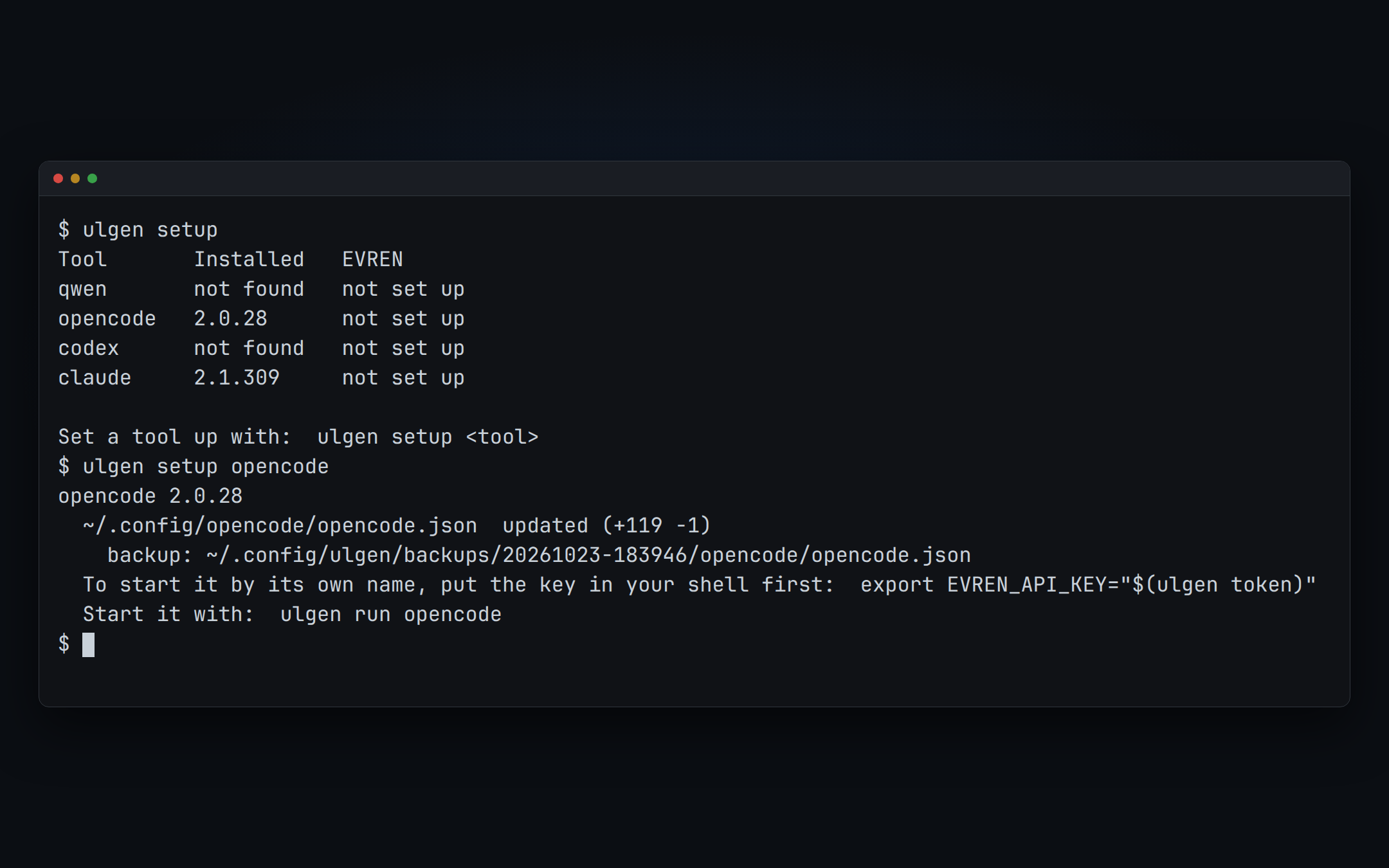
Ülgen finds the coding tools you have installed, asks which one you want and writes the EVREN settings into it, keeping a backup.
-
Start coding
The tool starts on an EVREN model. Next time ulgen starts it straight away; ulgen opencode, qwen, codex or claude switches to another one.
Features
- Run ulgen and it signs you in, finds the coding tools you have installed, asks which one you want, sets it up for EVREN and starts it. Later runs start that tool straight away.
- Works with Qwen Code, opencode, Codex CLI and Claude Code. Setup backs up every file it changes, --dry-run shows the change first, and setup --remove takes it out again.
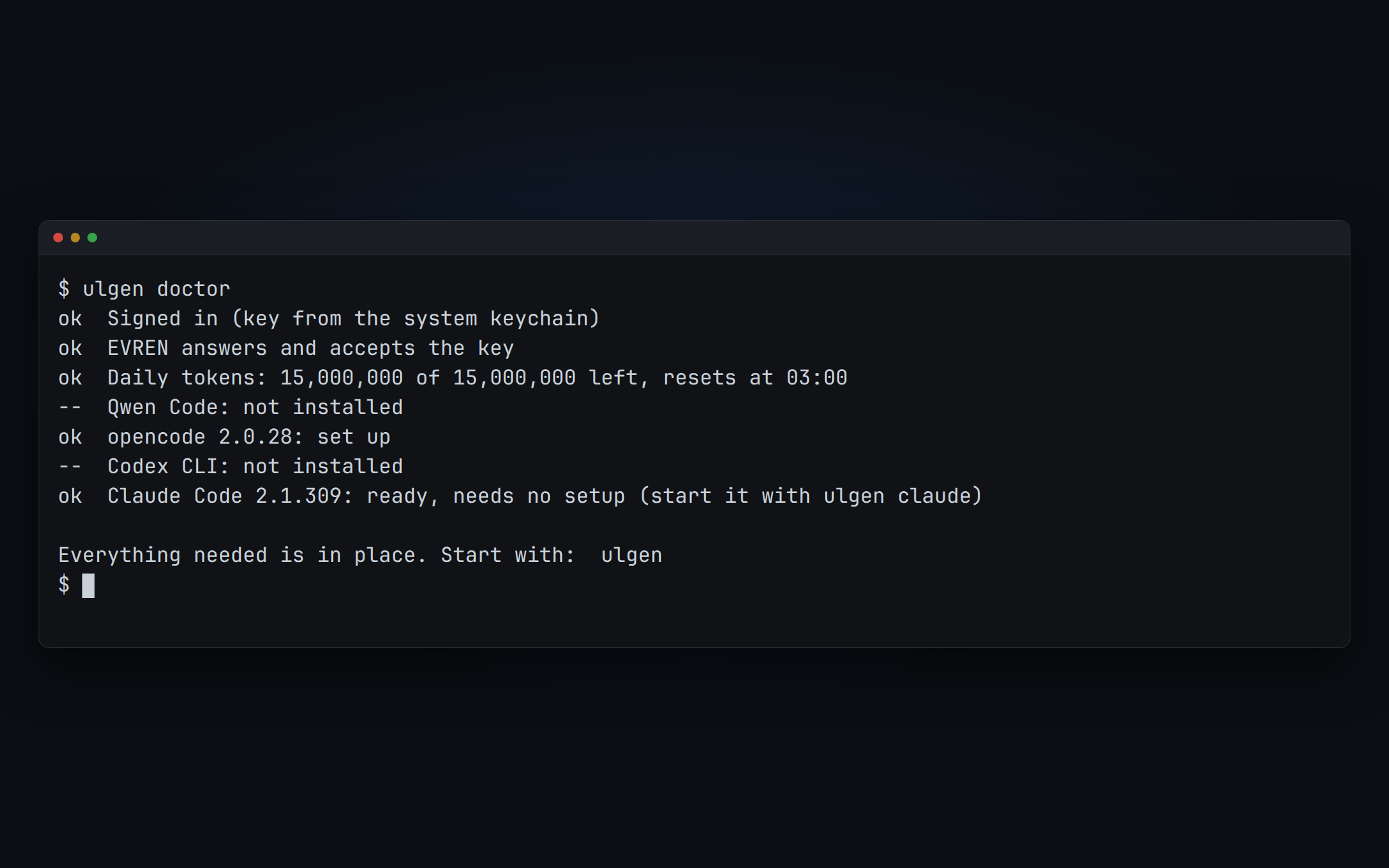
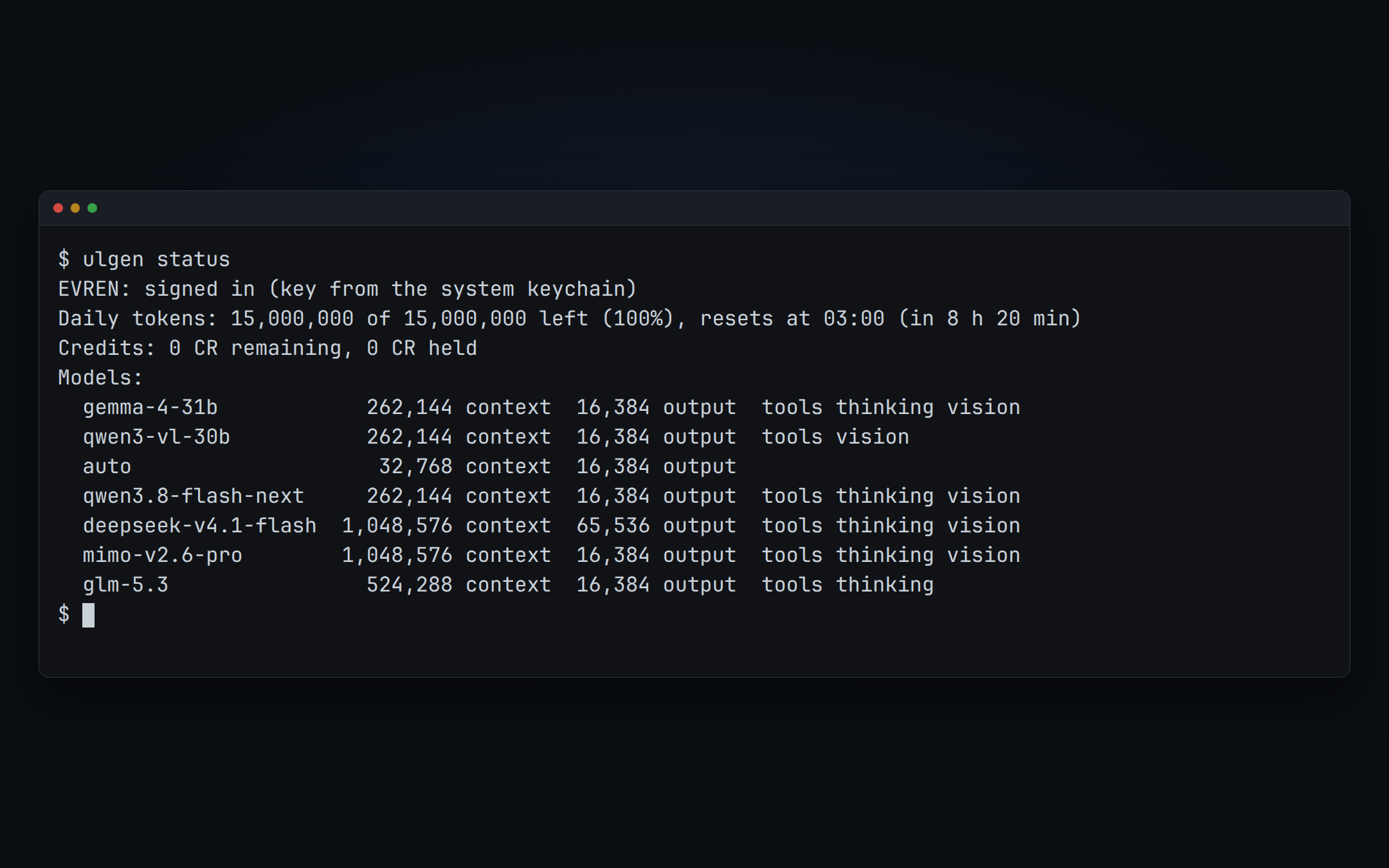
- ulgen status shows the remaining daily quota and the models; ulgen doctor checks the key, EVREN and every tool, and says what to do about what is wrong.
- The key is kept in the operating system's credential store (or, where the system has none, in a file only you can read). It is never written into a tool's settings file and never logged.
- Claude Code never receives the key at all: it talks to a translator inside Ülgen on your own machine.
- Every command follows the system language, Turkish or English.
- Installs with one line on Linux and macOS, or in PowerShell on Windows; Pardus, Debian and Ubuntu packages are available too.
- Known limits: Anthropic does not support Claude Code with other models, and ulgen run claude works through a translator and says so once per run. The token counts Claude Code shows on EVREN are estimates.
- Independent and non-commercial: not affiliated with EVREN or the makers of the tools it sets up.
Screenshots
Built with
Go